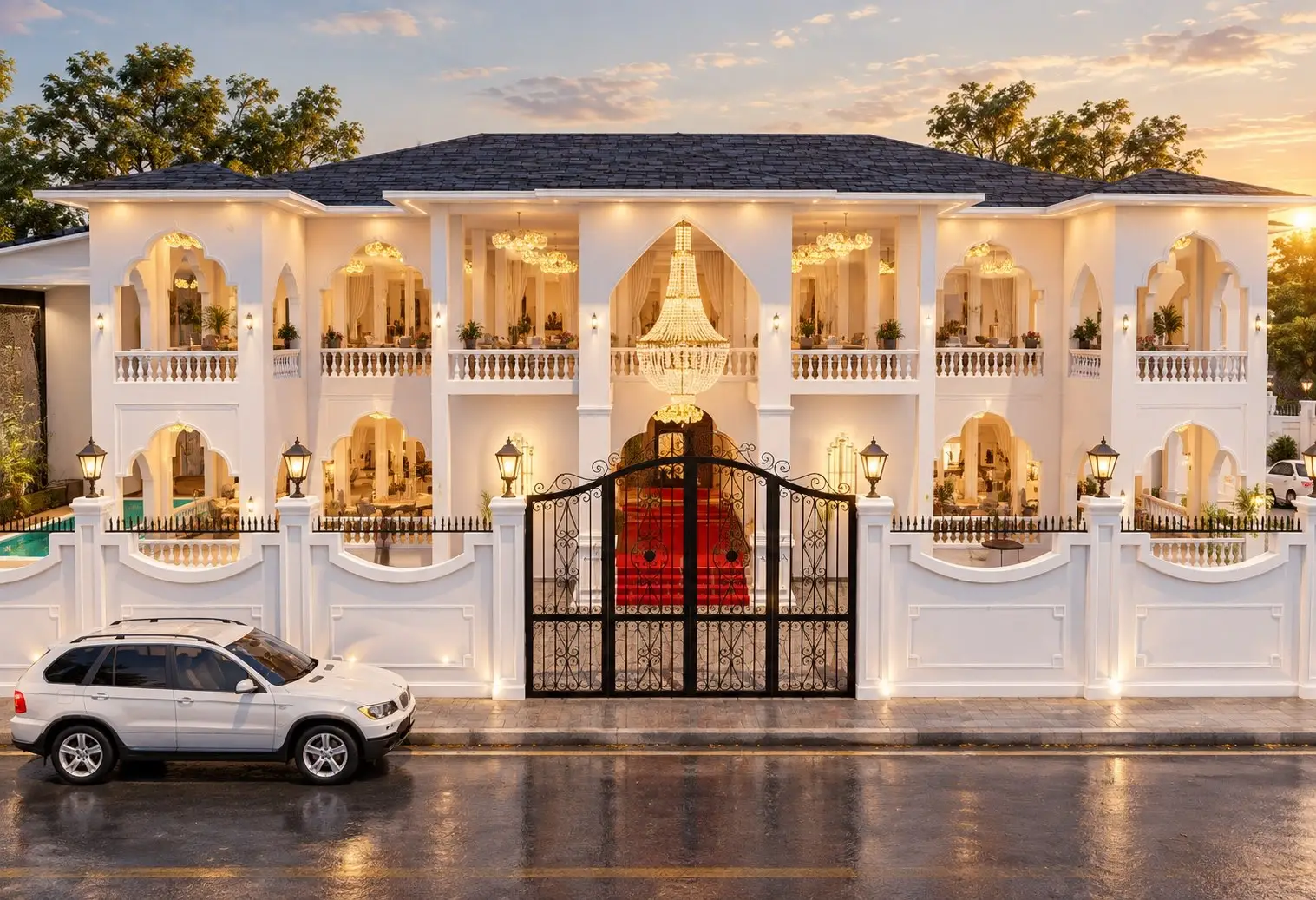
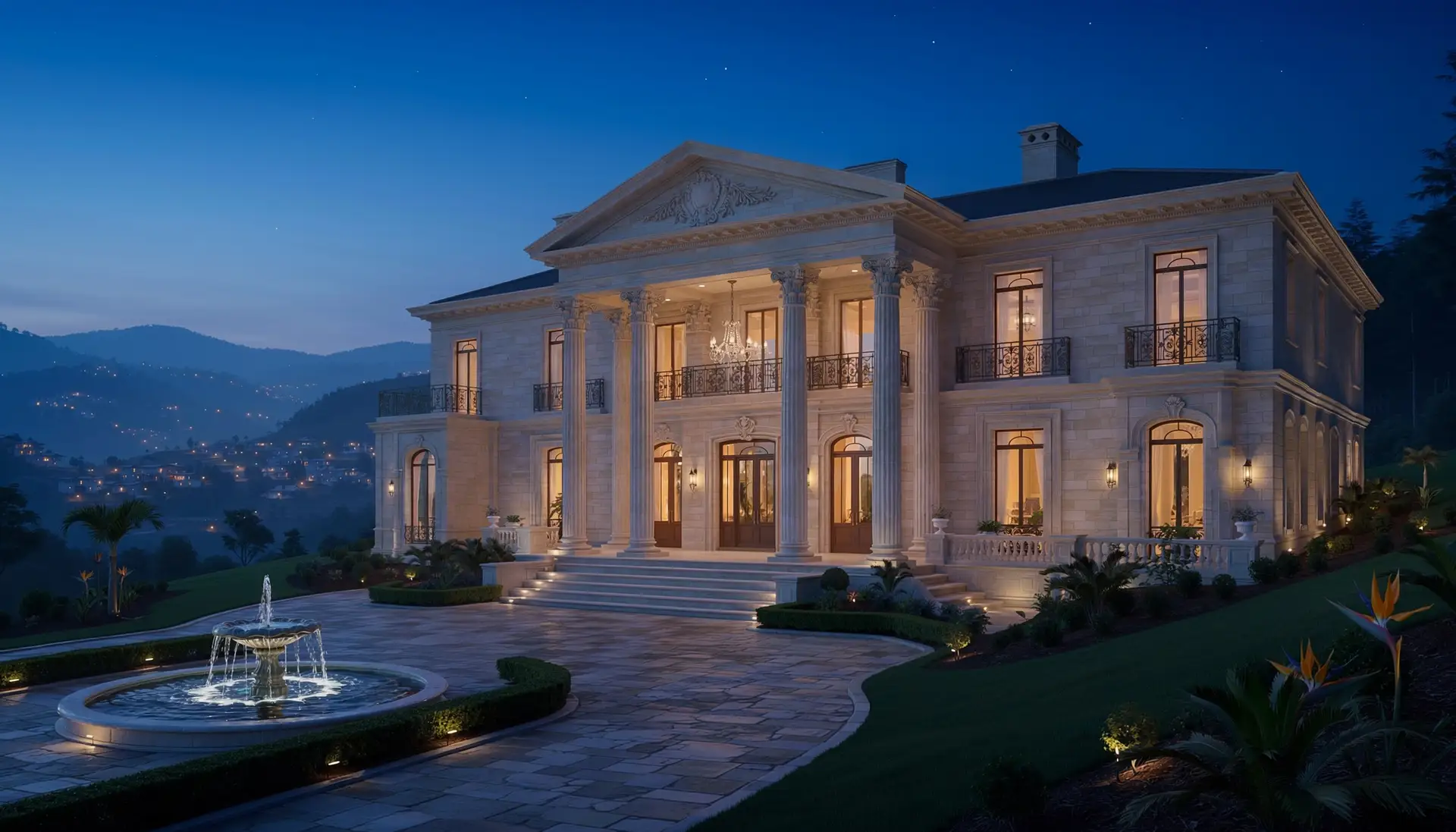
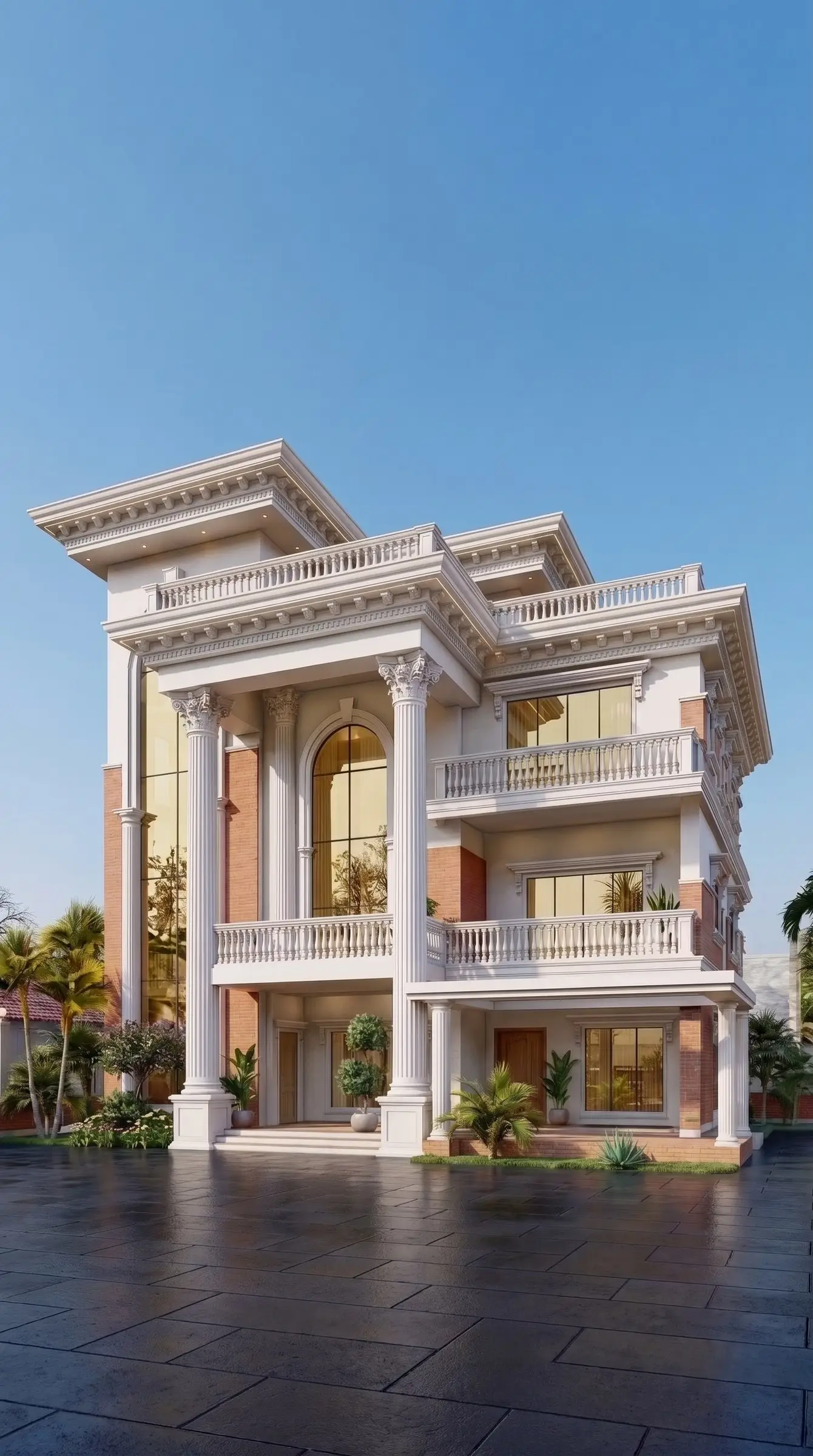
Modern house design in Nepal has evolved significantly over the past decade.
Homeowners increasingly seek residences that are simple, contemporary, functional and visually distinctive without relying on excessive decoration.
However, a modern house is not defined merely by a flat roof, large windows or a particular colour palette.
Good contemporary architecture begins with planning.
What Makes a House Modern?
Modern residential architecture often emphasizes:
- Simple forms
- Clear proportions
- Functional planning
- Natural light
- Ventilation
- Limited material palettes
- Integrated details
- Strong indoor-outdoor relationships
The objective is to achieve clarity rather than visual complexity.
Designing From Inside Out
The most convincing modern facades generally originate from good internal planning.
The location of bedrooms, living spaces, stairs, bathrooms and service areas influences the positions of windows, balconies and external walls.
The facade can then be developed as an expression of the internal organization.
This approach creates architecture with greater consistency.
Materials
A contemporary Nepali residence might combine several materials, such as:
- Concrete
- Brick
- Stone
- Timber
- Metal
- Glass
- Textured plaster
The number of materials should not necessarily be large.
A restrained palette can create a stronger visual identity when materials are carefully proportioned.
Windows and Openings
Large windows are frequently associated with contemporary architecture.
However, window size should respond to:
- Orientation
- Solar exposure
- Privacy
- Ventilation
- Surrounding buildings
- Furniture
- Energy considerations
More glass does not automatically mean better architecture.
Balconies
Balconies can provide valuable outdoor space while contributing to the facade.
Their depth, location, railing design and relationship with the rooms behind them should be carefully considered.
Minimalist House Design
Minimalism is particularly suitable for homeowners who prefer a clean architectural language.
A minimalist residence may use:
- Simple geometric forms
- Few materials
- Neutral finishes
- Carefully controlled openings
- Integrated storage
- Clean detailing
The challenge is that simplicity makes proportion and detailing more visible.
Modern Architecture for Small Plots
Modern design can work particularly well on compact urban properties.
Instead of attempting to make a small building appear unnecessarily elaborate, the architect can use proportion, natural light, material consistency and carefully designed openings to create architectural quality.
Cost Considerations
Modern architecture does not automatically mean higher construction cost.
A simple building form can sometimes be economical.
However, complex cantilevers, large spans, extensive glazing, custom details and specialized materials can increase the budget.
Design ambition should therefore remain aligned with the client’s construction budget.
Climate and Context
Architecture in Nepal should respond to the local environment.
Sunlight, rainfall, temperature, ventilation, shading and the surrounding urban context should influence design decisions.
A contemporary house should not simply imitate architecture from another country without adapting it to its location.
Conclusion
Modern house design in Nepal is best understood as an approach rather than a fixed appearance.
The strongest contemporary homes combine simple architectural ideas with careful planning, appropriate materials, natural light, structural clarity and attention to everyday life.
The result should be a house that remains useful and visually coherent long after the initial excitement of construction has passed.
How HNG can help
Architectural & Engineering Design
Architecture, structure and soil studies designed together, to Nepal’s seismic building code.